Water Heaters
Summer Water Heater Tips for Twin Cities Homes and Cabins
A Woodbury master plumber on summer water heater care: vacation mode settings, sediment flushing, and standby loss in East Metro homes. Call 651-738-0580.
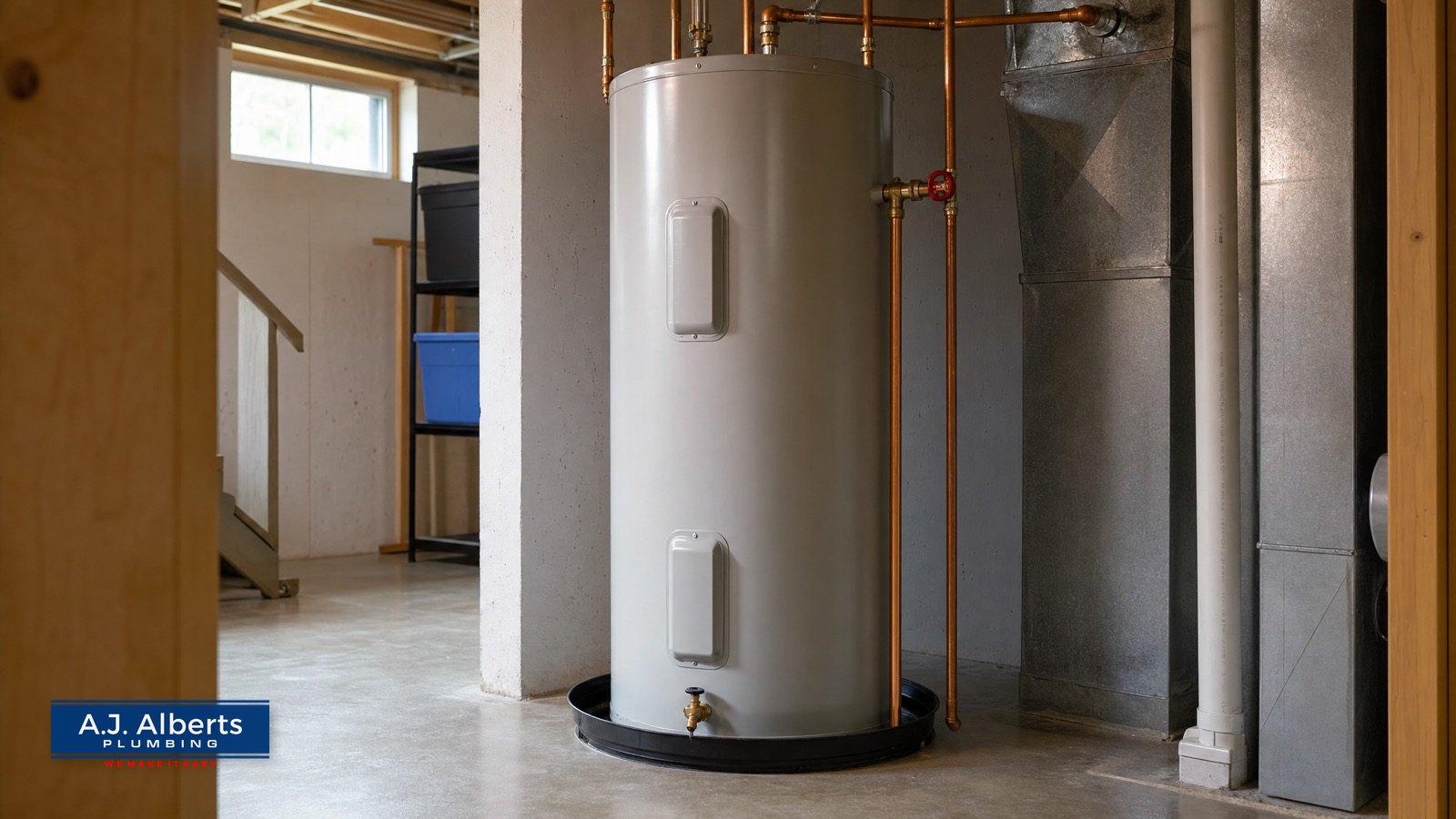
Summer is the best time of year to deal with your water heater, because nothing is at stake if it comes offline for an afternoon. Three things matter most: use the vacation setting instead of a full shutoff when you travel, flush the tank annually to clear the hardness scale that East Metro water deposits every single day, and keep the thermostat at 120 degrees Fahrenheit rather than lower. A tank that sits at low temperature for weeks is not saving you much money, and it is sitting right in the temperature range where bacteria grow.
Why summer is water heater season in the East Metro
We have been servicing water heaters in Woodbury, Stillwater, Cottage Grove, Lake Elmo, and Hudson since 1989, and the pattern never changes. December and January are when tanks fail and when a homeowner needs one replaced the same day. July is when nobody is thinking about it.
That is backwards. A water heater that gets a proper flush and inspection in July is a water heater that does not die on a Sunday morning in January. Summer is also when incoming water is at its warmest, which means the tank works less, recovery is faster, and taking the unit offline for an hour costs you almost nothing.
There is a second reason summer matters here specifically. Twin Cities families travel. Cabins in the St. Croix Valley and up north sit empty for stretches. Both of those situations create water heater questions that only come up between June and September.
What does vacation mode on a water heater actually do?
Vacation mode is not a gimmick. It is a low-temperature holding setting that keeps the tank warm enough to stay safe while cutting the standby loss you pay for when nobody is home.
Standby loss is the energy a storage tank burns simply keeping 40 or 50 gallons hot around the clock, whether you use a drop of it or not. The Department of Energy is direct about this: because water in a tank is constantly heated, energy is wasted even when no tap is running. Only tankless units avoid standby losses entirely.
Where to find the setting depends on your equipment:
- Gas water heater. Look at the gas control valve at the bottom front of the tank. Most dials have a position marked VAC or a low setting past the lowest numbered temperature. That keeps the pilot lit and the tank barely warm.
- Electric water heater. Either a vacation or away button on the control panel, or the lowest thermostat setting on units without a digital panel.
- Tankless. There is nothing to do. A tankless unit only fires when you open a hot tap, so it has no meaningful standby loss to reduce. If you are weighing that trade-off, our tank versus tankless comparison for Twin Cities homes walks through it honestly.
Should you shut the water heater off completely instead?
You can, and for a truly long absence it saves marginally more. But there are real costs to a full shutoff that most articles skip.
On an older gas unit with a standing pilot, off means relighting the pilot when you get home, and pilots on aging thermocouples do not always cooperate. On an electric unit, off means arriving home to 50 gallons of cold water and a multi-hour wait. And on any tank, a full cool-down followed by weeks of stagnation is exactly the condition that lets bacteria establish in the plumbing.
Here is how we tell customers to think about it.
| How long you are away | What to do with the tank | Why |
|---|---|---|
| 1 to 3 days | Leave it as is | Savings are negligible, and hot water is ready when you walk in |
| 4 to 14 days | Vacation or VAC setting | Cuts standby loss while keeping the pilot lit and the tank recoverable |
| 2 weeks or more | Vacation setting, plus shut off the main water supply | Protects against a supply line or fill valve failure with nobody home |
| Seasonal cabin, unused for months | Vacation setting or full drain and shutoff | A drained tank cannot leak or freeze, but must be refilled before power or gas is restored |
| Whole house winterized | Full drain, gas and power off | Standard for an unheated structure |
One rule applies in every row: turn off the water supply to the house before a long trip. A water heater is one of the more common indoor flood sources we get called to, and a tank that lets go while you are in another state is a very different insurance claim than one that lets go while you are standing in the laundry room.
The real summer job: flushing out hardness scale
This is where East Metro water makes our advice different from generic national guidance.
Woodbury city water runs about 13.5 grains per gallon, roughly 250 to 360 milligrams per liter as calcium carbonate. Anything over about 10.5 grains per gallon is classified as very hard. Blaine and several north metro cities run harder still. Private wells in the St. Croix Valley and Western Wisconsin often add iron and manganese on top of the hardness.
When that water is heated, the dissolved calcium and magnesium come out of solution and settle on the bottom of the tank as scale. This is not a slow process on 13-plus grain water. It happens with every heating cycle, every day.
What that layer does to your water heater:
- It insulates the burner from the water above it, so the burner fires longer to deliver the same hot water.
- It creates hot spots on the tank floor, which stresses the glass lining and the steel underneath.
- It steals usable capacity, which is why the shower runs cold sooner than it used to.
- It makes the popping and rumbling sound you hear when water flashes to steam trapped under the scale.
A tank water heater generally lasts 10 to 15 years. On unsoftened East Metro water, we regularly pull tanks that did not make it near the top of that range. If you are already weighing that decision, we wrote a full breakdown on when to repair versus replace a water heater.
How often should the tank be flushed?
On unsoftened water at East Metro hardness levels, once a year. With a properly sized softener protecting the tank, you can usually go longer between flushes because the calcium and magnesium are removed before the water ever reaches the heater.
A word of honest caution on the do-it-yourself version. On a tank that has gone eight or ten years without a flush, the drain valve is often plastic, often partially blocked, and does not always reseat once you open it. If you have never flushed the unit and it sounds like a coffee percolator, that first flush is worth having a licensed plumber do. We carry the parts to replace a failed drain valve on the truck. A homeowner at 9 p.m. usually does not.
The water quality tie-in most people miss
If you have to flush the tank every year to keep scale under control, you are managing a symptom. The cause is the water.
A properly sized softener removes hardness minerals before they reach any heated surface in the house, which protects the water heater, the dishwasher, the washing machine, the faucet cartridges, and the shower valves at the same time. That is why we lead with water quality rather than with equipment. For the full picture on hardness in this area, see our Minnesota hard water and softener guide, or read about a proper water softener installation for your home.
If you do not know your numbers, get them. We test water free at your home or at our Woodbury showroom on Afton Road. Because we have zero commissioned salespeople, that test is a diagnosis, not a pitch. Schedule a free water test and you will get your hardness, iron, and manganese numbers along with a straight answer about whether you need anything at all.
Temperature: do not set it lower than 120 degrees
There is a persistent piece of internet advice that says turning your water heater way down saves money. Turning it down to 120 degrees does. Turning it below 120 does not save enough to justify what it creates.
The Minnesota Department of Health recommends a minimum setting of 120 degrees Fahrenheit. Legionella bacteria grow best in stagnant water between roughly 77 and 113 degrees. A tank held below 120 for weeks while a family is on vacation sits inside that window. Temperatures in the 130 to 140 range kill more organisms but raise a real scald risk, especially with kids or older adults in the house, which is why 120 with thermostatic mixing at the fixtures is the practical answer for a home.
The Department of Energy puts the savings from dropping an overheated tank to 120 degrees at roughly 36 to 61 dollars per year, and notes that adding an insulating blanket to an older tank can cut standby losses by 25 to 45 percent. Both are worth doing. Going below 120 is not.
When you get back from a long trip, run every hot water fixture in the house for several minutes before anyone showers. That flushes the stagnant water sitting in the lines and the tank out of the system. It costs you five minutes.
A short summer checklist
While the stakes are low, do the whole list:
- Flush the tank, or schedule it.
- Check the temperature setting and confirm it is at 120 degrees.
- Test the temperature and pressure relief valve and make sure its discharge pipe runs down toward the floor.
- Look at the top of the tank and the connections for corrosion or mineral crust, which is often the first visible sign of a slow leak.
- Confirm the drain pan, if you have one, is clear and draining somewhere useful.
- Note the manufacture date on the label. Past 10 years on unsoftened water, start planning rather than reacting.
- Ask about the anode rod. It is the sacrificial metal that corrodes so your tank does not, and it is checked far less often than it should be.
Homeowners on our maintenance plan get this handled on schedule rather than remembered in a panic. We serve the full East Metro service area, including Woodbury, Stillwater, Cottage Grove, Oakdale, Lake Elmo, Afton, Hugo, Maplewood, and across the river into Hudson and River Falls.
The Bottom Line
Summer is the low-stakes window to do the water heater work that pays off in January. Use the vacation setting rather than a full shutoff when you travel, shut off the house water for longer trips, keep the thermostat at 120 degrees, and flush the tank annually because East Metro water deposits scale every day it runs. If you are flushing scale year after year, treat the water instead of the symptom.
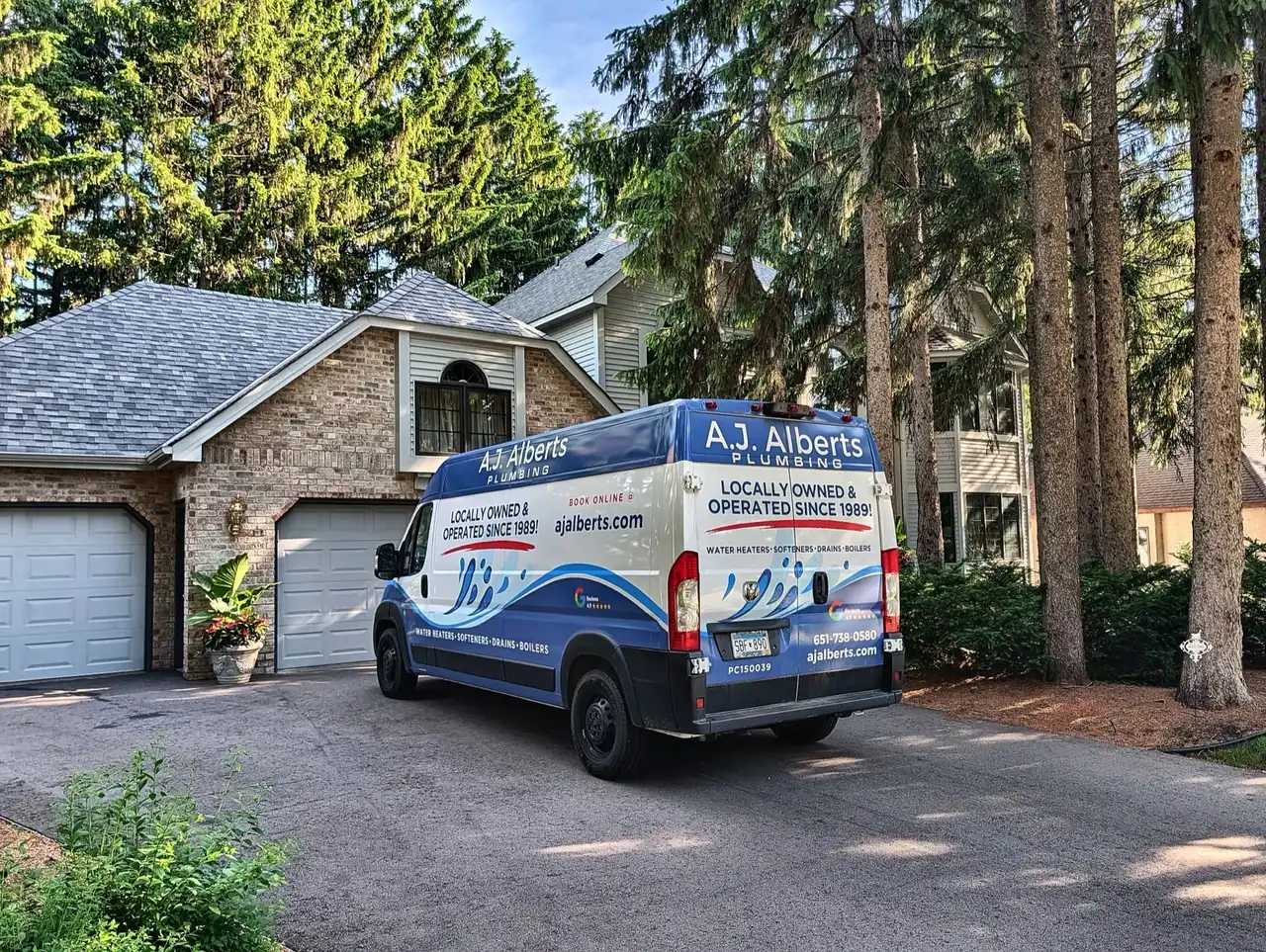
AJ Alberts Plumbing and Water Conditioning has been locally owned and family operated since 1989, with 10 plumbers, 5 of them master plumbers, and zero commissioned salespeople. Licensed and insured in Minnesota, license PC150039, and in Wisconsin.
Call 651-738-0580 to schedule a water heater flush and inspection or a free water test, or learn more about our water heater service.
Sources and Further Reading
- US Department of Energy, Energy Saver: Water Heating
- Minnesota Department of Health: Preventing the growth and spread of Legionella in buildings
- City of Woodbury: Water Softening and Water Hardness
Frequently Asked Questions
Should I turn my water heater off when I go on vacation?
What temperature should a water heater be set to in Minnesota?
How often should I flush my water heater in the East Metro?
Why does my water heater rumble or pop in the summer?
Does a water softener actually make a water heater last longer?
What should I do with the water heater at a lake cabin over the summer?
Need Help in the Twin Cities?
Free in-home water test. Written upfront pricing. Lifetime craftsmanship warranty.